

𝐓𝐡𝐞 𝐞𝐚𝐫𝐥𝐲 𝐧𝐨𝐫𝐰𝐞𝐠𝐢𝐚𝐧 𝐚𝐪𝐮𝐚𝐜𝐮𝐥𝐭𝐮𝐫𝐞 𝐢𝐧𝐝𝐮𝐬𝐭𝐫𝐲 𝐰𝐚𝐬 𝐛𝐮𝐢𝐥𝐭 𝐛𝐲 𝐛𝐮𝐬𝐢𝐧𝐞𝐬𝐬𝐞𝐬 𝐚𝐧𝐝 𝐩𝐢𝐨𝐧𝐞𝐞𝐫𝐬 𝐰𝐡𝐨 𝐛𝐞𝐥𝐢𝐞𝐯𝐞𝐝 𝐬𝐚𝐥𝐦𝐨𝐧 𝐟𝐚𝐫𝐦𝐢𝐧𝐠 𝐜𝐨𝐮𝐥𝐝 𝐛𝐞𝐜𝐨𝐦𝐞 𝐚𝐧 𝐢𝐧𝐝𝐮𝐬𝐭𝐫𝐲 𝐨𝐟 𝐭𝐡𝐞 𝐟𝐮𝐭𝐮𝐫𝐞.
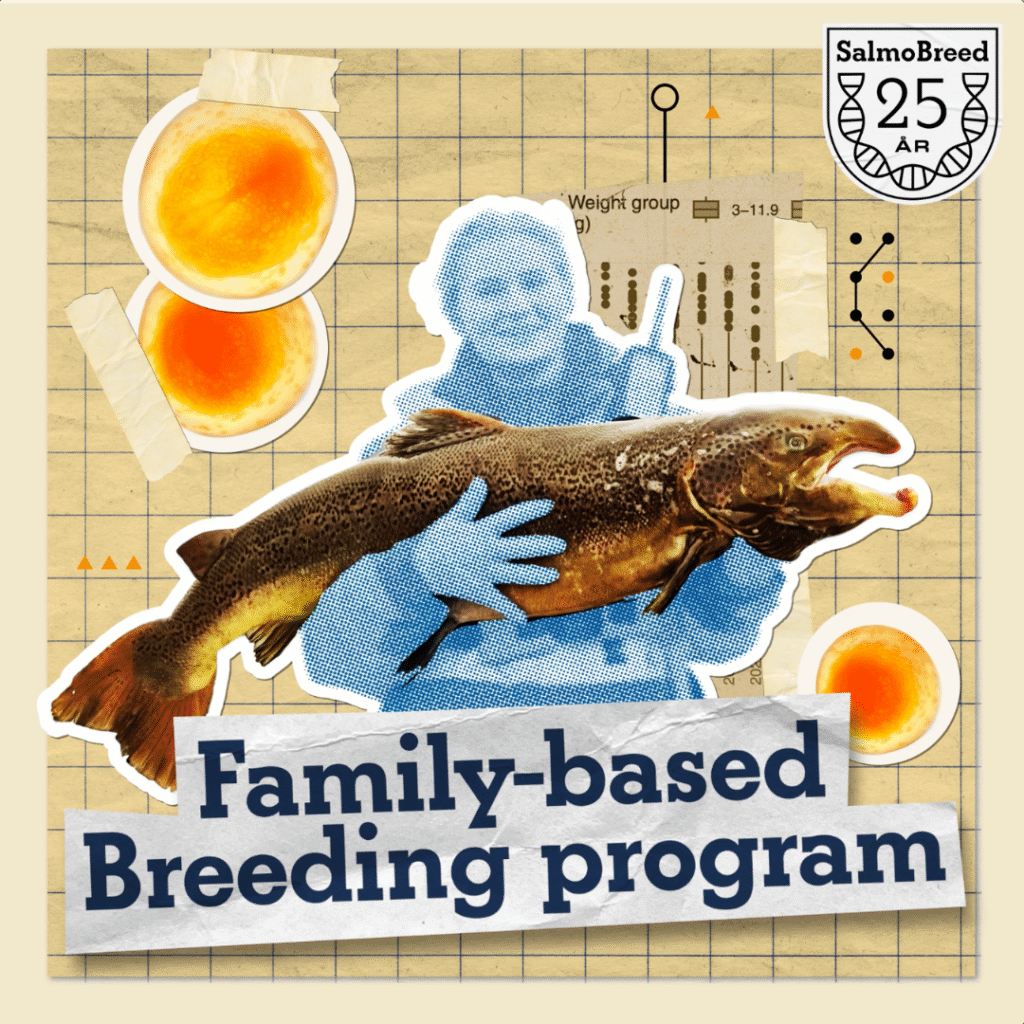
When breeding programs entered Norwegian aquaculture more than 50 years ago, selection was largely phenotypic. Along the riverbanks, workers in rubber boots and oilskins would catch salmon and use physical appearance and body weight as selection criteria. The best-looking, heaviest and fastest-growing salmon were then chosen as broodstock.
“The beginning of the Norwegian aquaculture adventure was, for the most part, driven by family businesses that had the vision and belief that this would become an industry of the future.”
– Terje Refstie, one of the central geneticists in establishment of the SalmoBreed.
While phenotypic selection laid the groundwork, it also had clear limitations: lower accuracy in genetic progress, higher biological risk, and little opportunity to balance growth with traits such as robustness, disease resistance, and long-term performance.
A major shift came in 1975, when AKVAFORSK (the Norwegian Institute of Aquaculture Research) launched the first family-based breeding program in aquaculture. Twenty-six years later, SalmoBreed was established – marking a shift toward family-based breeding and pedigree-based selection, focused on traits measured at sea such as growth, sexual maturity, harvest quality and disease resistance. Since 2015, genomic selection was adopted for growth and disease resistance to accelerate the transfer of superior genetics to Norwegian salmon farms.
More stories from the early days of SalmoBreed – and the journey since – coming soon.