

New Genotyping Tool Powers Breeding for Climate Change and Disease Resilience Future-Proofing Europe’s Clam Industry
As climate change and disease pressures intensify, the future of clam production in Europe depends on how well and quickly these animals can adapt to their new norm. A new genomic tool offers hope: a dual-species SNP array developed by a European research consortium* in collaboration with Benchmark Genetics. This tool supports advanced breeding by facilitating research for the identification and selection of traits of interest such as resilience, robustness, and survival under changing environmental conditions.
This dual species SNP array consists of two panels: A high density (HD) panel for the Manila clam (Ruditapes philippinarum; ~49,000 markers) and a medium density (MD) panel for the grooved carpet shell (Ruditapes decussatus; ~14,000 markers). Through its partnership with the European research consortium, Benchmark Genetics has played a key role in developing comprehensive genomic tools for these two clam species, opening access to applications like genomic selection, parentage analysis, and population genetics at an unprecedented scale for the sector.
Addressing a Long-Standing Genomic Gap
While genomic tools are already standard in breeding programs for salmon, shrimp, oysters, and other aquaculture species, most bivalves have largely lagged behind. This development, which has been successfully validated in families and across different clam populations across EU, brings clam genetics into the modern era, offering cost-effective, high-throughput genotyping that paves the way for hatcheries and researchers to target traits of interest more precisely.
“This marks a major step forward in aligning clam breeding with the genomic advancements already benefiting other aquaculture species,” said Dr. Luca Peruzza, scientist involved in the EU-funded project IGNITION.
By designing a shared tool for two species, the consortium reduced technical and financial barriers, allowing broader access to advanced breeding technologies.
“Our collaborative approach demonstrates how strategic partnerships can extend the benefits of advanced genetic technologies to previously undeserved species, facilitating progress in advanced selective breeding for clams,” said Dr. Luca Bargelloni, coordinator of the EU-funded project ShellFishBoost.
Looking Ahead
This genotyping platform will serve as the foundation for ongoing research initiatives focused on:
- Climate Resilience: determine the genetic parameters of traits associated with environmental stressors.
- Disease Resistance: Targeting genetic markers linked to survival against key threats such as Perkinsus and Vibrio infections.
- Environmental Robustness: Improving performance traits across different aquaculture settings.
- Sustainable shellfish bed management: Understanding the demographic and genetic dynamics of clam beds and their monitoring for sustainable production.
- Customer preferences: aligning breeding and production strategies with customer preferences by linking genetic markers to traits of commercial and consumer relevance.
These advances, powered by high-throughput genomic tools, will strengthen clam breeding programs by promoting healthier and more adaptable stocks, a key factor for achieving long-term sustainability in a changing climate.
Partnering with Benchmark Genetics
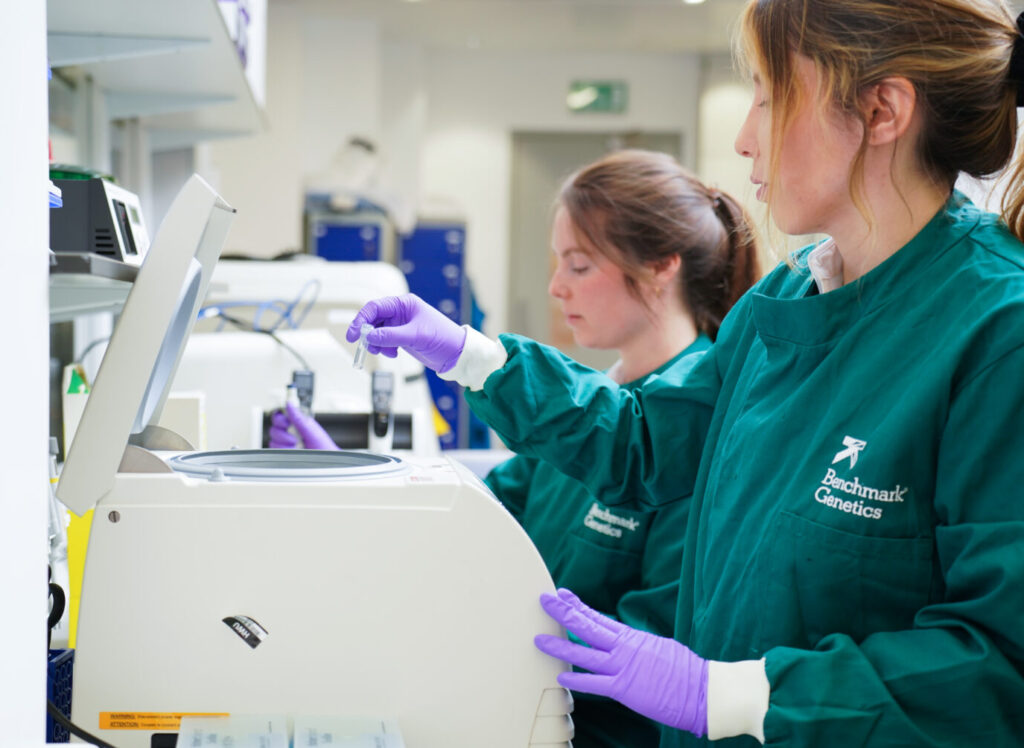
As the consortium’s genotyping partner, Benchmark Genetics provided technical expertise in SNP array design, DNA extraction workflows, and high-throughput genotyping for bivalves. Their infrastructure supports large-scale sample analysis, ensuring reliable data delivery and efficient integration into breeding pipelines.
The resulting datasets now power genome-wide association studies (GWAS), parentage analyses, and genomic selection research into how clam genetics interact with environmental and pathogenic factors-information that directly informs breeding strategies.
“This project shows what’s possible when research and industry collaborate,” said Dr. Peñaloza. “By pairing the consortium’s expertise with our genomic tools, we’re finally bringing long-overdue innovation to clam breeding.”