

Tailored Genotyping Platform Accelerates Breeding for Disease Resistance and Productivity.
As Swedish aquaculture continues to evolve – facing disease challenges, increasing biosecurity expectations, and a growing focus on sustainable development – Arctic charr (Salvelinus alpinus) farming is increasingly looking to advanced genetic solutions. With support from Jordbruksverket, using both national and EU funding, researchers at the Swedish University of Agricultural Sciences (SLU) have developed a high‑quality population‑specific SNP array to enhance breeding results. The goal is to promote healthier fish, better resilience to disease, and more efficient production.
Led by Dr. Christos Palaiokostas at SLU’s Division of Applied Genetics, the project GenoAvel – Genomic Selection for More Productive Arctic charr in Sweden, targets one of the sector’s most urgent challenges: bacterial kidney disease (BKD). Caused by Renibacterium salmoninarum, BKD is a chronic and difficult-to-detect disease that can lead to high mortality. In Sweden, confirmed outbreaks trigger mandatory culling and facility decontamination, making preventive strategies essential for the long-term viability of char farming.
GenoAvel applies genomic selection to enable earlier and more accurate breeding decisions. By integrating genomic insights with performance and health data, breeders can identify fish with superior genetic resistance to BKD alongside improved growth and feed efficiency. This proactive approach reduces mortality while supporting greater productivity and sustainability.
Building a High-Quality Genotyping Tool
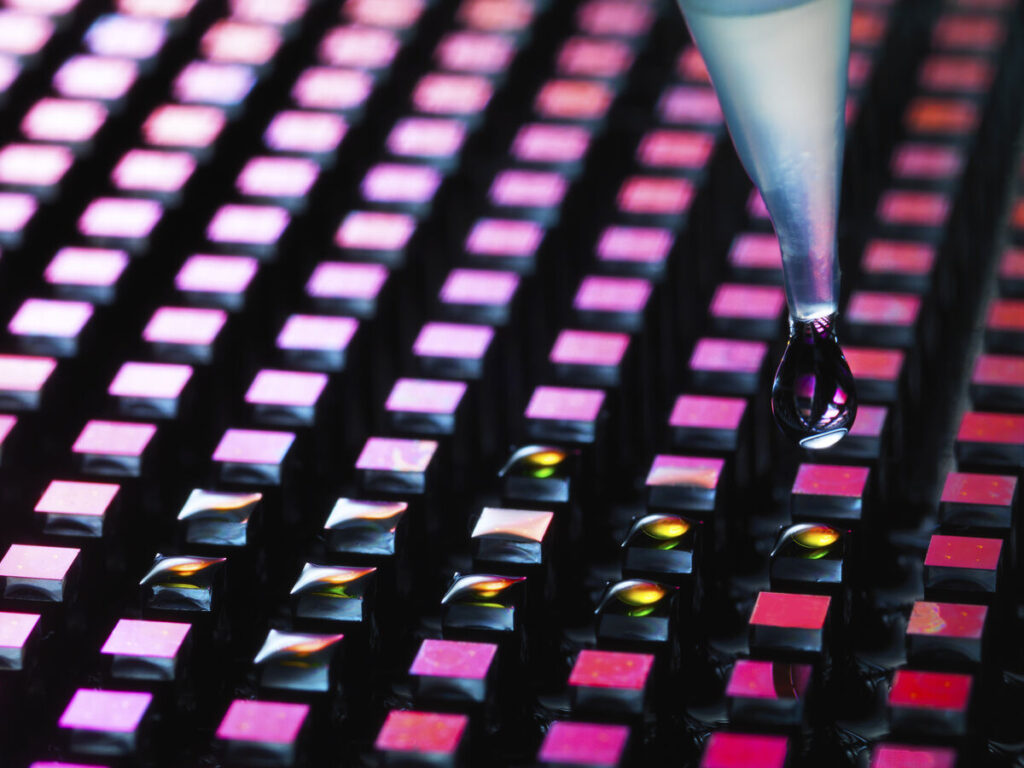
To deliver the precision required for genomic selection, the GenoAvel team, working closely with Benchmark Genetics, first developed a high-density SNP array containing nearly 600,000 markers across the Arctic char genome. From this dataset, the most informative and robust markers were selected to create the Salpinus Axiom array: a 70K SNP chip tailored specifically to the Swedish breeding population.
This two-step strategy, high-density discovery followed by rigorous marker curation, ensures exceptional accuracy, reproducibility, and resolution. Given the Arctic charr’s complex genome, this approach was critical to delivering a tool capable of supporting reliable genomic selection at a commercial scale.
“By focusing on the best markers from the high-density array, we ensure that every breeding decision is based on the strongest possible genetic evidence,” explains Dr. Christos Palaiokostas at SLU’s Division of Applied Genetics. “This level of precision is critical for improving disease resistance, productivity, and long-term sustainability in Swedish Arctic char aquaculture.“
Genomic Selection as Prevention
Unlike traditional approaches that respond after outbreaks occur, genomic selection enables prevention. Breeders can identify genetically resilient fish before symptoms appear, reducing biosecurity risk and reliance on reactive measures. The SNP array can also be applied to additional heritable traits, providing flexibility as breeding objectives evolve. As Palaiokostas notes, “Genomic selection allows us to improve multiple traits simultaneously, helping farmers produce healthier fish while using resources more efficiently.”
Benchmark Genetics’ Contribution
As the genotyping partner, Benchmark Genetics provided technical expertise in SNP array design and access to its high-throughput Genotyping Services infrastructure. Drawing on its experience in aquaculture genetics, the company applied proven workflows for DNA extraction, SNP analysis, and quality-controlled data delivery – processing Arctic charr samples at a scale that ensures robust, reliable, and reproducible genomic data for the Swedish breeding program.
“This collaboration marks a leap forward for Swedish Arctic charr breeding,” says Dr. Carolina Peñaloza, Genotyping Lead at Benchmark Genetics. “With a population-specific SNP array and scalable genotyping workflows in place, producers can now apply genomic selection as a routine, preventive tool to build long-term resilience against disease.”
A Foundation for the Future
With approximately SEK 7.7 million in EU funding, GenoAvel represents a major investment in the future of Swedish aquaculture. The project runs until 2026, but the technology is already being applied alongside data collection and breeding strategy development.
“Genomic selection is a key building block for the aquaculture of the future,” concludes Palaiokostas. “With better genetics, we can improve animal welfare, reduce losses from disease, and produce food more sustainably. This is just the beginning of what genetic technology can achieve for fish farming.”