

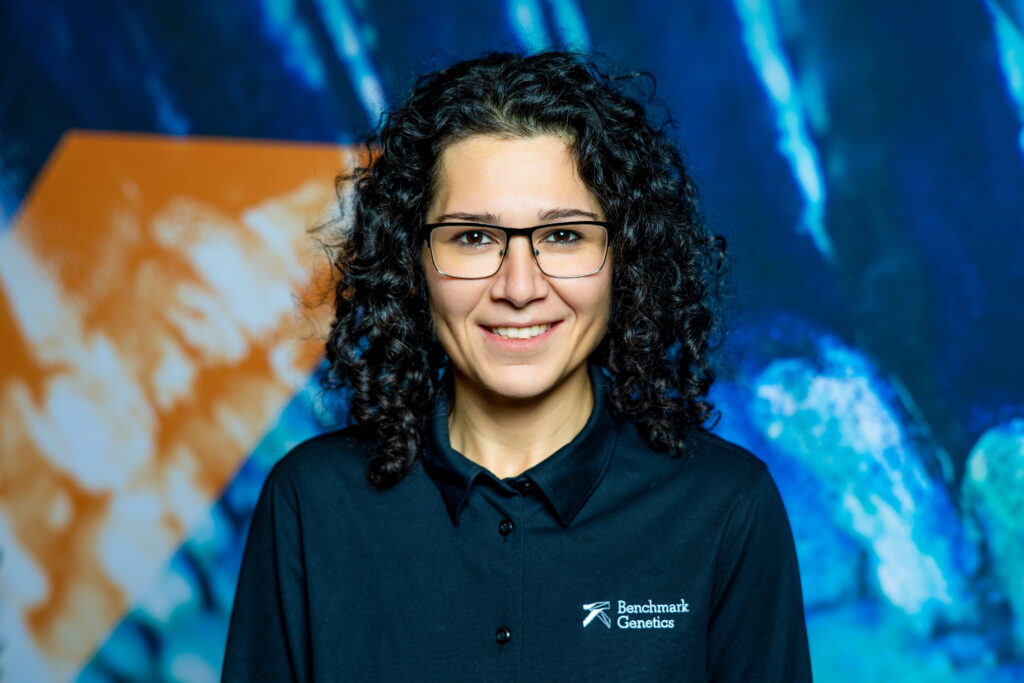
Dr. Serap Gonen has newly taken on the role of Head of Salmon Breeding Programs at Benchmark Genetics, bringing extensive expertise in salmon genetics, disease‑resistance research, and advanced breeding program development. She holds a Ph.D. from the Roslin Institute in Scotland, with a research focus on disease resistance in Atlantic salmon, and has previously led and optimized breeding programs at Mowi and AquaGen. In her leadership role at Benchmark Genetics, she oversees the strategic development and innovation of salmon breeding programs to strengthen performance, resilience, and future‑focused genetic improvement.
Can you walk us through your career journey – from your Ph.D at the Roslin Institute through roles at Mowi and AquaGen – to becoming Head of Salmon Breeding Programs at Benchmark Genetics?
I completed my Ph.D in 2015 (10-year anniversary last year!) in the genetics of disease resistance in Atlantic salmon. I continued at the Roslin Institute as a postdoctoral researcher, where I had the opportunity to diversify my skills into other livestock species, plants and even human genetics.I always aimed to return to aquaculture, and I was given that opportunity in 2018 when I started a position working closely with the Norwegian and Canada East breeding programs at Mowi. In that role, I gained valuable insight into the interplay between production and genetics an area I find especially rewarding. In 2023, this path led me to AquaGen, where I continued working at the interface of production and genetics. Since joining Benchmark Genetics in January 2025, my work has focused on bridging our breeding programs in Iceland and Norway, as well as contributing to the strategy and optimisation of program design and selection.
What attracted you to the aquaculture industry?
Ever since childhood, fish have fascinated me. In the UK, dentists often have large aquariums in their waiting rooms, and I would look forward to appointments just so I could sit and watch the fish swimming. That early fascination made it clear I would enjoy working with fish, though I didn’t consider what that could look like until I began working in academia on industry‑linked projects. It may sound cliché, but seeing the direct impact of research out in the field became a powerful motivator and ultimately inspired the move from academia into industry.
What inspired your focus on disease resistance genetics in Atlantic salmon, and how has that passion evolved throughout your roles?
I am a true believer in aquaculture as a sustainable protein source, and improving the welfare and survival of fish in aquaculture systems plays a huge role in continuing the growth of aquaculture. The more I learn, the more I see how much genetics can help achieve this growth, and this motivates me to continue and improve in this area.
Role at Benchmark Genetics
As Head of Salmon Breeding Programs, what are your top strategic priorities for innovating Benchmark Genetics’s breeding programmes?
As with all breeding companies, the aim is to be the best in the aquaculture industry! That means constant improving of our breeding programs to achieve the highest gain possible for all traits that are included in our breeding goal. This can be achieved by optimizing several key areas, including genotyping, accuracy and volume of data collected that is relevant for the trait in a field setting, having access to a larger pool of candidates to select from and the collaboration between genetics and other business areas. These are the areas that I am most involved and focused on.
What does a typical day look like for you in your role?
My role is primarily computer‑based, though I also enjoy spending time on sites whenever the opportunity arises. Much of my work involves analysing data and collaborating with the rest of the genetics team to identify ways to improve our processes and systems, as well as implementing those improvements.

Carlos Lozano and Edwin Carl Liebig.
Can you share details about the “LuseLess” project on sea lice resistance – your goals, methodologies, and anticipated impact?
Sea lice have been a major challenge for the industry for many years, and although extensive research and breeding efforts have been dedicated to this trait, the impact of current selection strategies has not yet been demonstrated in the field. This makes it essential to re‑evaluate the trait, particularly in terms of the phenotypes being collected and used in selection. The LuseLess project will focus on the immune system and skin cell composition of Atlantic salmon, aiming to determine whether it is possible to select for an immune response that rejects sea lice after attachment and/or identify individuals with skin characteristics that prevent lice from attaching in the first place.
Science & Practical Impact
How do you bridge the gap between genomic discovery and scalable breeding tools in commercial aquaculture?
There is a path from discovery through R&D to application in a commercial setting – but this is something Benchmark Genetics has a strong track record of. Any new salmon ova product or trait we bring to market undergoes rigorous testing before it is offered to customers.
What are the main challenges in breeding for traits like immune resilience, and how is your team addressing them?
One of the main challenges we face is that, except for a few cases, traditional breeding using genomic selection for resistance or resilience takes time, and there is often no quick fix for the serious issues faced by the industry. However, with the development of new phenotyping and genomic tools, we continue to improve our work and evolve the way we assess resistance and resilience – sometimes moving away from traditional approaches toward new methodologies that can deliver faster impact in the field.
Sustainability & Industry Outlook
What role do you see genomics playing in the broader sustainability goals of salmon farming?
Genomics is one of many tools available to farmers to improve their stock and products. Selection, whether phenotypic, family‑based, or genomic has played a critical role in achieving the gains, particularly in growth, that the salmon industry benefits from today. Looking ahead, the focus should remain on the welfare of the fish as they encounter increasingly variable environments. The challenge is to continue achieving growth gains while also improving the robustness of salmon across a wide range of conditions.
Benchmark Genetics has launched genotyping services globally. How do these services empower producers and benefit the wider industry?
Although I am part of the salmon team and therefore admittedly a bit biased, aquaculture extends far beyond salmon alone. For breeding programs that already have strong, reliable production systems and well‑established family‑based breeding routines with good data recording, incorporating genomic information is the natural next step. This allows programs to accelerate genetic gain and enhance traits of importance more efficiently. Benchmark Genetics Services has a strong track record of developing and implementing genomic solutions across a wide range of species, and it is an honour to support companies globally as they work toward their improvement goals.
Women in Aquaculture Leadership
As a woman leading in a traditionally male-dominated field, what unique perspectives do you bring and what barriers have you encountered and overcome?
I’m not sure whether this is related to being a woman or not, but I consider myself a fairly balanced person with a strong dislike of drama. Minimizing unnecessary stress and avoiding creating hassle for others, in my view, helps build better relationships and allows everyone to move forward more effectively. Despite this, I have often found it challenging to have my voice heard and my ideas fully respected or taken on board. At times, I feel sidelined and that the experience I bring is overlooked. My response to this has been to make sure I don’t treat others in the same way.
What advice would you give to young women aspiring to careers in aquaculture genomics or biotechnology?
If this has been a dream of yours – as it has been mine – for a long time, then don’t give up, even when you face setbacks. Follow your gut and do what is best for you. Surround yourself with other strong women that are rooting for you, draw on their experience and knowledge, and let them help you grow – then pass the favour on directly to them or the next generation. Women tend to compete rather than support at the leadership level, but I prefer to celebrate the achievements of fellow women in their careers!
Future Vision
Looking ahead, which emerging traits (e.g., disease resistance, feed efficiency, climate adaptability) are you most excited to incorporate into breeding programs?
I don’t see the disease challenges we currently have in the industry going away in the short term, and we might even add to this list over the next coming years. It will be exciting to be involved in the innovative ways that we will try to speed up the process to resolve these issues. Climate adaptability, in particular coping with quick fluctuations in temperature and rising sea temperatures is already a strong focus outside of Europe and likely going to become a focus area also in Europe in the coming years.
How do you envision the future of salmon genomics at Benchmark Genetics over the next 5–10 years?
I think the core of the breeding work will be maintained, but we will add on new phenotypes and genomic methods/tools to help us increase the rate of genetic improvement. We have several projects looking into new phenotypes for diseases that have existed for a while, but where our current selection strategies are not providing results quick enough. Depending on the development of regulations, gene editing for welfare traits shows promise. The use of surrogate broodstock to propagate the best genetics to the industry is also another area that I am excited about.